sevice@vcarsystem

*Name

*Mobile

+86

*E-Mail

*Company

*Support types

*Country

*Province/City

*District

Leave Message

I agree with the PrivacyPolicy and terms and conditions of VCARSYSTEM
With the rapid electrification and intelligence of automobiles, software has become the core of automotive innovation, bringing unprecedented complexity to automotive testing. As a key tool to address these challenges, software platforms are irreplaceable in automotive testing but also face urgent pain points in practice. This article outlines their importance and existing pain points to provide references for the global automotive testing industry. While software platforms serve as pivotal tools to tackle these challenges, they remain plagued by pressing practical pain points.

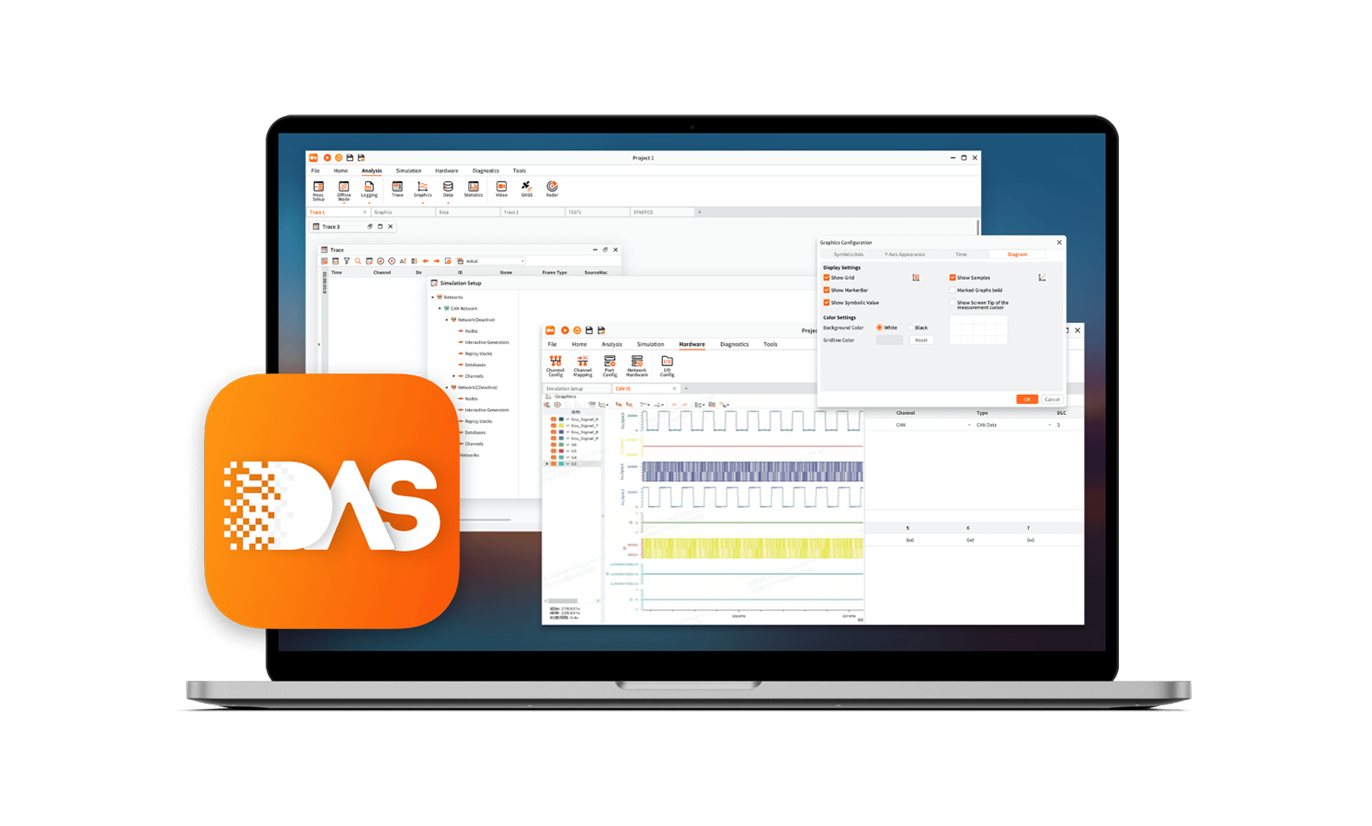
VCAR DAS

Integrated SIL/HIL Testing & In-Vehicle Bus Development/Testing Software Platform
All-in-one simulation, fault injection, diagnostics & scripting — Maximum Efficiency, Seamless Convenience.
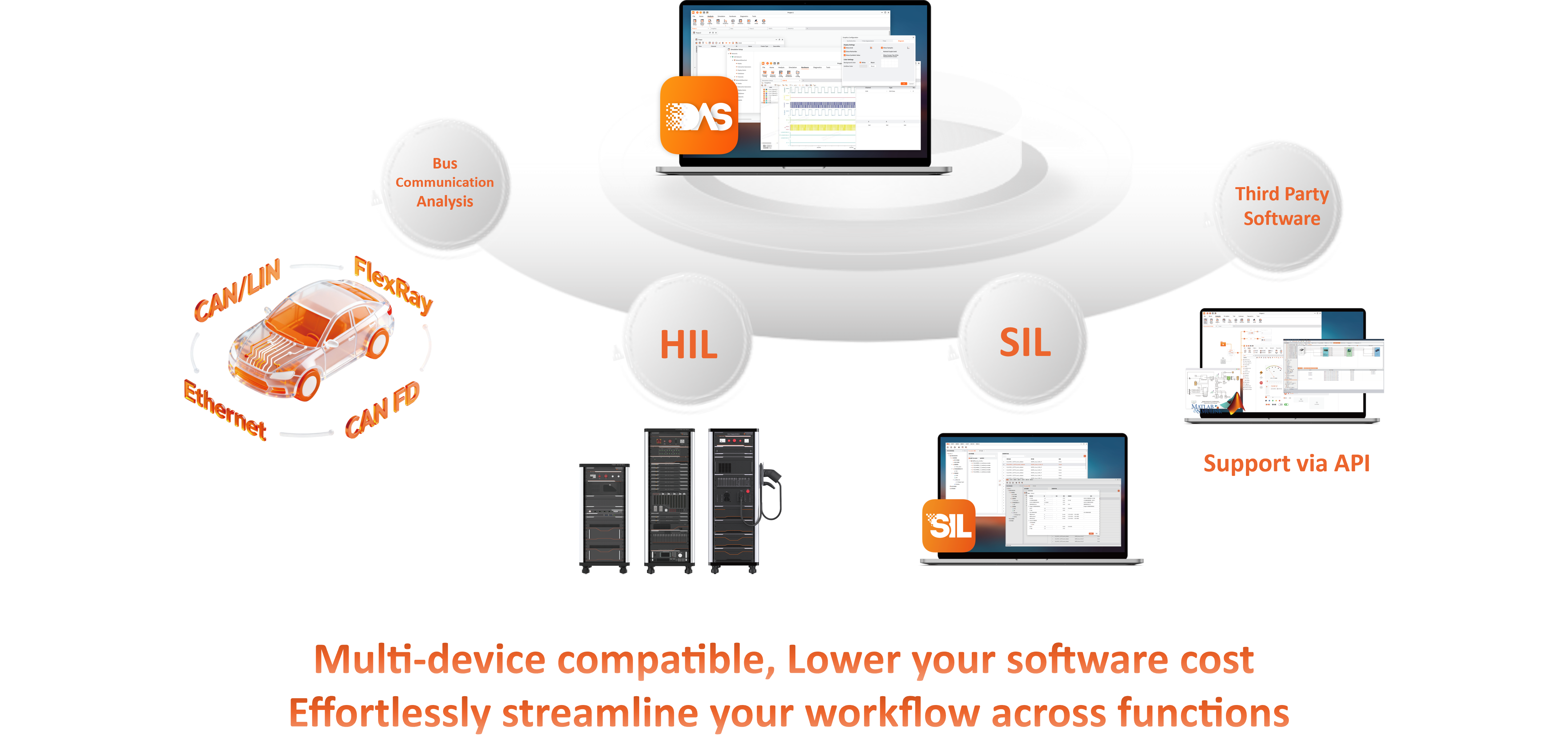
At the core of the VCARSYSTEM solution is VCAR DAS, a single unified software hub that powers all DV, PV and EoL testing equipment. This means test scripts developed for SIL/HIL in the lab can be directly reused for EoL mass production testing—eliminating redundant work and ensuring consistency across the entire product lifecycle.

VCAR DAS

For automotive HIL test engineers and bus developers,VCAR DAS is your all-in-one automotive development, testing, and analysis platform: it unites VCAR DAS consolidates HIL test execution, engineering configuration, in-vehicle bus simulation, diagnostics, and automated testing capabilities into a unified solution. Swap fragmented toolchains for automated end-to-end workflows to cut manual busywork, speed up cycles, and boost testing accuracy. Focus on building robust automotive systems—not fighting disjointed tools.

Advantages

Streamline Workflows Across Platforms

Consolidates full-lifecycle capabilities (HIL test execution, engineering configuration, in-vehicle bus testing) into one platform. It replaces fragmented toolchains, reduces cross-tool manual collaboration, and lets teams focus on core testing tasks.

High Flexibility & Compatibility

Supports GUI drag-and-drop configuration, custom models/nodes/signals, and compatibility with industry standards (e.g., ASAM) and diverse model/protocol file types—adapting to varied testing scenario requirements.

Efficient, Cost-Saving

Enables parallel management of multiple test benches/test environments; pairs with CAPL/Python automation scripts to shorten project cycles, cut on-site collaboration costs, and reduce tool operation and maintenance expenses.

Robust Functionality & Standard Compliance

Covers fault injection across all bus layers and multi-protocol closed-loop testing; aligns with industry standards while accommodating custom needs, ensuring test compliance and product adaptability.

Fully In-House Developed

Leverages a self-developed software architecture to eliminate reliance on third-party tools, safeguard system data security, and support flexible expansion and iteration of business scenarios.

Functions

Centralized Management of HIL and SIL Resources

Configure and manage multiple HIL test benches/ SIL operating environments simultaneously; support manual addition and remote auto-retrieval of board card information, single interface for configuration, execution, and monitoring . Centralized control of HIL I/O, loads, and power.

In Vehicle Network Configuration

Enable communication setup for buses (CAN, LIN, ETH, etc.); create Ethernet virtual topologies (switches, ports, MAC addresses, VLANs, etc.) to implement simulation and fault injection across all bus layers (physical, data link, application).

Model & Node Simulation

Load diverse model types (e.g., Simulink, CarSim); create virtual nodes (e.g., CAPL, network, DDS); import protocol files (e.g., arxml, dbc) to enable bus encoding/decoding, SOA node simulation, and closed-loop testing.

Test & Signal Management

Run multiple test environments concurrently on a single device; build test interfaces via GUI drag-and-drop editing; define stimulus signals graphically (e.g., constant, sine, random) and support signal monitoring, recording, and playback (compatible with ASAM MDF format).

Fault Injection & ECU Flashing

Support controller fault injection and bus fault injection (electrical, link, application layers); enable ECU flashing via XCP/Ccp protocols.

Diagnostics & Automation

Implement UDS diagnostics (over CAN FD/Ethernet) and custom execution of diagnostic services; support CAPL/Python script editing for automated test case execution and custom interface development.

Associated Products

HIL SYSTEM

More

Download Center

SOFTWARE

Download

VIDEOS

Download

USE CASES

Download

GET SUPPORT

Contact us

To address the growing complexity of R&D requirements, we will tailor solutions to your specifications and offer expert consulting and engineering services.

Contact us